
Information
Malaysia comprises 13 States and 3 Federal Territories. The national capital and largest city is Kuala Lumpur, while Putrajaya is the Federal Administrative Centre and the seat of the Federal Government.
Malaysia’s population is estimated at approximately 34.4 million in 2026. The country is geographically divided into two principal regions: Peninsular Malaysia (West Malaysia) and East Malaysia, located on the island of Borneo. Peninsular Malaysia comprises 11 States and 2 Federal Territories, namely Kuala Lumpur and Putrajaya. East Malaysia comprises the States of Sabah and Sarawak, together with the Federal Territory of Labuan.
Peninsular Malaysia occupies the southern part of the Malay Peninsula and is separated from East Malaysia by the South China Sea. East Malaysia occupies the northern part of the island of Borneo and shares land borders with Indonesia and Brunei. Malaysia is also situated close to Singapore and has maritime boundaries and regional connections with neighbouring countries including Thailand, Indonesia, Brunei, the Philippines and Singapore.
Malaysia’s strategic location in Southeast Asia, together with its extensive road, rail, port and airport infrastructure, established industrial base and strong connections with regional and international markets, provides an important platform for trade, investment and business development.
Geographic coordinates: 2 30 N, 112 30 E
Map references: Southeast Asia Area: total: 329,750 sq. km land: 328,550 sq. km water: 1,200 sq. km Area – comparative: slightly larger than New Mexico
Area : total: 329,750 sq. km land: 328,550 sq. km water: 1,200 sq. km
Population: About 36.4 million (2025).
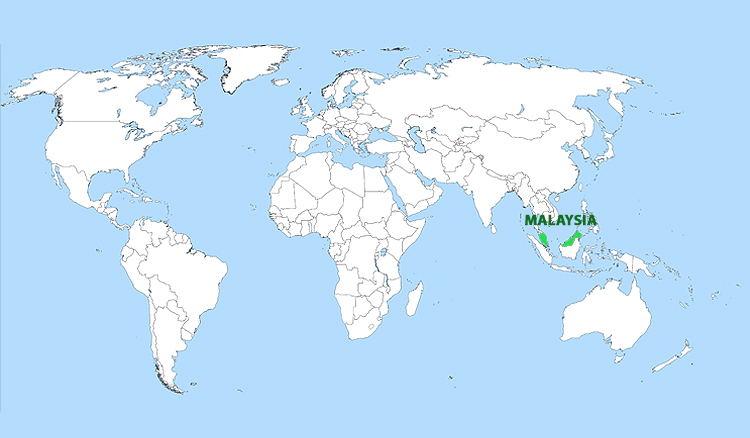
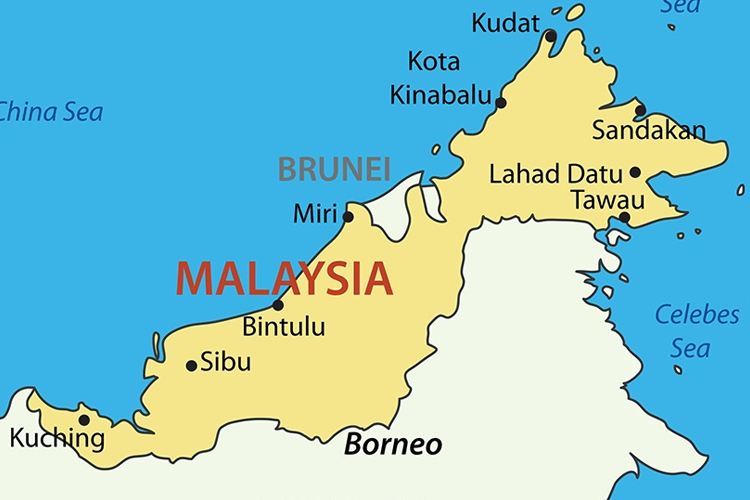
Land boundaries: total: 2,669 km border countries: Brunei 381 km, Indonesia 1,782 km, Thailand 506 km
Coastline: 4,675 km (Peninsular Malaysia 2,068 km, East Malaysia 2,607 km)
Maritime claims: continental shelf: 200-m depth or to the depth of exploitation; specified boundary in the South China Sea exclusive economic zone: 200
Climate: tropical; annual southwest (April to October) and northeast (October to February) monsoons
Terrain: coastal plains rising to hills and mountains Lowest point: Indian Ocean 0 m Highest point: Gunung Kinabalu 4,100 m
Natural resources: petroleum and natural gas, timber, tin, iron ore, bauxite, gold, coal, manganese, rare earth
Land use: arable land: 3% permanent crops: 12% permanent pastures: 0% forests and woodland: 68% other: 17% Irrigated land: 2,941 sq. km
Natural hazards: floods and landslides are two common hazards
Environment – current issues: air pollution from industrial and vehicular emissions; water pollution from raw sewage; deforestation; smoke/haze from neighboring countries forest fires.

GUIDELINES TO DOING MINING BUSINESS IN MALAYSIA
OVERVIEW
Malaysia is a diversified and open economy in Southeast Asia, supported by a well-developed manufacturing and services sector, extensive infrastructure, a skilled workforce and strong trade and investment linkages with regional and international markets. Malaysia’s economy grew by 5.2% in 2025, with gross domestic product (GDP) reaching approximately RM1.74 trillion.
Malaysia has a diverse mineral-resource base covering metallic, industrial, strategic and energy minerals. Based on mineral-resource assessments undertaken by the Department of Mineral and Geoscience Malaysia (JMG), Malaysia’s mineral resources were previously estimated at approximately RM4.11 trillion, comprising metallic minerals valued at about RM1.03 trillion, non-metallic or industrial minerals at about RM2.96 trillion and energy minerals at about RM0.12 trillion. This figure represents an estimated resource value based on the information and prices used in the assessment and should not be regarded as the current market value of commercially recoverable mineral reserves.
JMG’s continuing mineral-resource assessment and mapping programmes have identified significant potential for commodities including gold, tin, iron, bauxite, silica sand, silica rock, limestone and coal, as well as strategic minerals such as rare earth elements (REE), scandium and thorium.
The mineral sector therefore offers opportunities across the entire mineral value chain, including exploration, mining, mineral processing, refining and downstream manufacturing. This value-chain approach is consistent with Malaysia’s current mineral-sector policy, which places increasing emphasis on responsible resource development, technology, value addition, human-capital development and environmental, social and governance (ESG) considerations.
Trade and investment policies form an integral part of Malaysia’s broader economic development strategy. For mineral investors, however, it is important to understand that mineral development is subject to a combination of Federal and State laws and administrative requirements. In particular, the authority to administer land and mineral tenements principally rests with the respective State Governments, while the Federal Government provides national mineral policy, technical expertise and regulatory functions within its areas of jurisdiction.
The following sections provide a general guide to the principal policy, legal, regulatory, environmental and investment considerations for companies and investors intending to undertake mineral exploration, mining, processing or related mineral-based activities in Malaysia.
MINERAL POLICY
The mineral industry is under the national policy and technical purview of the Ministry of Natural Resources and Environmental Sustainability (NRES) at the Federal level. However, mineral resources, land matters and the granting and administration of mineral tenements are principally within State jurisdiction under the Federal Constitution and applicable State legislation. Accordingly, applications for mineral prospecting, exploration and mining rights are administered by the respective State authorities, with technical and regulatory matters involving Federal agencies such as the Department of Mineral and Geoscience Malaysia (JMG).
The Federal and State Governments coordinate mineral-sector policy and development through the National Mineral Council (NMC), or Majlis Mineral Negara (MMN). The Council was originally established by a Cabinet decision on 23 December 1998. In 2009, it was merged with the National Land Council because of the close relationship between land and mining matters. The Government subsequently agreed to re-establish the National Mineral Council in 2020. The re-established Council serves as an important platform for the Federal and State Governments to discuss policy and operational matters concerning the development of Malaysia’s mineral industry.
Malaysia’s first National Mineral Policy (NMP1/DMN1) was formulated in 1992. It was subsequently revised as the National Mineral Policy 2 (NMP2/DMN2) in 2009. NMP2 provided the policy foundation for developing an effective, efficient and competitive mineral sector and emphasised the optimal exploration, extraction and utilisation of mineral resources, supported by modern technology and research and development. It also placed emphasis on security of tenure, improved governance and regulation, environmental protection, rehabilitation and sustainable mineral development.
The Government subsequently developed the National Mineral Policy 3 (NMP3/DMN3) to respond to developments in the mineral industry and the need to strengthen the mineral value chain. The NMP3 policy framework was presented to and agreed by the Cabinet on 17 January 2024. It focuses on the strategic management of mineral resources so that the mineral industry can become an important contributor to the national economy and the well-being of the people through the responsible and sustainable development of the entire mineral value chain.
NMP3 is structured around five strategic pillars, supported by 26 strategies and 77 initiatives, namely:
- Strengthening the legal and industrial environment;
2. Strengthening the entire mineral industry value chain;
3. Advancement of technology in the mineral industry;
4. Development of expertise and skills in human capital; and
5. Emphasis on Environmental, Social and Governance (ESG) principles.
As of December 2025, NRES reported that the NMP3 Action Plan was at the final stage of finalisation. Although a number of initiatives aligned with NMP3 had already been initiated, NRES indicated that full implementation of the Action Plan was expected to proceed progressively from 2026.
MINERAL INDUSTRY TRANSFORMATION PLAN
The National Mineral Industry Transformation Plan 2021–2030 (TIM 2021–2030) was developed as a long-term plan to transform Malaysia’s mineral industry through a more holistic and integrated approach. The framework was approved by the Cabinet on 4 December 2020 and subsequently adopted as an important agenda for the development of the mineral industry.
TIM 2021–2030 seeks to transform the mineral industry at every stage of the value chain, encompassing the upstream, midstream and downstream sectors. Its broad direction includes strengthening governance and legislation, improving mineral-resource information and mapping, encouraging technology and innovation, developing human capital, promoting value-added mineral products and strengthening sustainable mineral development.
TIM 2021–2030 should now be read together with NMP3. NMP3 provides the Government’s newer policy framework for the mineral sector, while TIM 2021–2030 remains relevant as a transformation and development framework supporting the industry’s longer-term development.
ENVIRONMENTAL REQUIREMENTS
Environmental protection is an important component of mineral development in Malaysia. Mineral projects may be subject to Federal and/or State environmental requirements depending on their location, nature, scale and activities involved.
In Peninsular Malaysia, environmental impact assessment (EIA) requirements for prescribed activities are principally governed by the Environmental Quality Act 1974 and the Environmental Quality (Prescribed Activities) (Environmental Impact Assessment) Order 2015. The 2015 Order replaced the former EIA order and sets out the prescribed activities for which an EIA is required.
The current prescribed activities for the mining sector include, among others, specified ore-processing activities outside a mineral-tenement area and certain sand-mining activities. The requirement for an EIA therefore depends on the specific prescribed activity and applicable threshold rather than simply on the size of a mining lease.
Investors should therefore determine at the early planning stage whether a proposed project is subject to EIA requirements and identify the applicable Federal or State environmental legislation. Sabah and Sarawak have their own environmental legislation and EIA requirements, and projects in those States should be assessed under the applicable State framework.
Environmental requirements may also include approvals or conditions relating to land clearing, water resources, pollution control, scheduled waste, rehabilitation, biodiversity and other environmental matters, depending on the nature and location of the project.
IMPLICATIONS FOR MINING INVESTORS
Investors intending to establish a mining business in Malaysia should therefore assess the project as a combination of mineral rights, land rights, technical approvals, environmental requirements and investment considerations, rather than treating company incorporation alone as authorisation to undertake mining.
The principal matters that normally require consideration include:
~ identification and geological assessment of the mineral resource;
~ availability and status of the proposed mining or exploration area;
~ the applicable State mineral legislation and mineral-tenement system;
~ prospecting, exploration or mining rights issued by the relevant State authority;
~ technical requirements and regulatory matters administered by JMG;
~ environmental impact assessment and other environmental approvals, where applicable;
~ land-use, forestry and other State approvals where relevant;
~ occupational safety and health requirements;
~ taxation, mineral royalties, land premiums, rentals and other State charges;
~ import, customs and export requirements;
~ investment and company-registration requirements;
~ mineral processing and downstream requirements; and
~ rehabilitation, ESG and other sustainability obligations.
The precise requirements vary according to the mineral commodity, proposed operation, project location and State concerned. Investors should therefore obtain project-specific advice and consult the relevant Federal and State authorities before committing to exploration or mining activities.
View National Mineral Policy 2 (NMP2)
View National Mineral Industry Transformation Plan (TIM) 2021 – 2030
MINING LEGISLATION
The principal legislation governing mineral exploration and mining in Malaysia comprises the federal Mineral Development Act 1994 (Act 525) and the applicable State legislation governing mineral tenements. The Mineral Development Act 1994 came into force on 1 August 1998 and applies throughout Malaysia. It provides for the inspection and regulation of the exploration and mining of minerals and mineral ores, including matters relating to mining operations, safety, environmental protection and enforcement. The Act is administered and enforced by the Department of Mineral and Geoscience Malaysia (JMG).
The issuance and administration of mineral prospecting, exploration and mining rights remain principally within the jurisdiction of the State Governments. In Peninsular Malaysia, these matters are governed by the respective State Mineral Enactments. Sabah and Sarawak have separate mining legislation, namely the Sabah Mining Ordinance and the Sarawak Mineral Ordinance, respectively. Accordingly, the applicable legislative framework depends on the State or territory in which the mineral activity is undertaken.
Mineral Development Act (1994) (MDA)
The Mineral Development Act 1994 (Act 525) provides for the inspection and regulation of the exploration and mining of minerals and mineral ores, as well as related matters. The Act applies throughout Malaysia, subject to its provisions concerning its application in individual States. The Department of Mineral and Geoscience Malaysia (JMG) is responsible for administering and enforcing the MDA, including regulating mineral exploration and mining activities and overseeing compliance with requirements under the Act and regulations made pursuant to it. JMG also assists in the enforcement of State mineral legislation, including the respective State Mineral Enactments.
State Mineral Enactment (SME)
The State Mineral Enactments provide the legal framework for the administration and regulation of mineral resources within the respective States in Peninsular Malaysia. They govern matters including the granting and administration of mineral tenements, such as prospecting licences, exploration licences and mining licences or leases, as applicable under the relevant State legislation. The State Authority has jurisdiction over mineral resources within the State, while the relevant State land and mines authority administers the mineral tenement system. JMG provides technical and regulatory assistance to the State Governments and assists in the enforcement of State mineral legislation.
The State Mineral Enactments in Peninsular Malaysia share a number of common features, although their provisions and administrative arrangements may differ between States. These features include:
~ Centralised administration
Applications for mineral tenements are generally submitted through the relevant State land and mines authority, which maintains records relating to mineral tenements and areas subject to applications. The precise administrative procedures and authorities involved may vary between States.
~ State Mineral Resources Committee
The State Mineral Resources Committee (SMRC) is established under the relevant State mineral legislation to consider and coordinate applications relating to mineral tenements and to make recommendations to the State Authority, where required. The composition and functions of the SMRC are prescribed by the respective State legislation and may therefore differ between States.
For example, under the Mineral (Perak) Enactment 2003, the SMRC comprises a Chairman appointed by the State Authority, the State Legal Adviser or representative, the Director who acts as Secretary, representatives of JMG, the Department of Environment and the Forestry Department, the Director of the State Economic Planning Unit, and other members appointed by the State Authority.
Applications for Mineral Tenements
The types of mineral tenements available, the eligibility of applicants, and the procedures for obtaining them are governed by the applicable State mineral legislation. Depending on the relevant State enactment, applications may be made by individuals, companies or other entities legally entitled to hold mineral rights or mining land in Malaysia. The eligibility of foreign-owned or foreign-incorporated entities is subject to the applicable State legislation and any other relevant laws and requirements.
The applicable State legislation should therefore be consulted for the specific requirements governing prospecting, exploration and mining activities in each State.
The issuance of licenses and leases by the State is subjected to certain conditions and restrictions as prescribed under the SME, as follows;
Prospecting/Exploration License:
| Prospecting License | Exploration License | |
|---|---|---|
| Area for exploration work | 25-400 hectares | 400-20,000 hectares |
| Valid period | Maximum 2 years | Maximum 10 years |
| Extension period | + 2 years | + 5 years |
| Application for renewal | Not later than 6 months prior to expiry of the License | Not later than 12 months prior to expiry of the License |
Small scale mining operation/large scale mining operation:
| Small scale operation | Large scale operation | |
|---|---|---|
| Target for mining | Alluvial | Hard rock |
| Area for mining lease | Such size as reasonably required for the mine | Such size as reasonably required for the mine |
| Requirement for EIA | Areas more than 250 hectares | Areas more than 250 hectares |
| Duration of mining lease | Estimated life of the ore body to be mined or 21 years whichever is shorter | Estimated life of the ore body to be mined or 21 years whichever is shorter |
| Term of renewed mining lease | Estimated remaining life of the ore body or 21 years whichever is shorter | Estimated remaining life of ore body or 21 years whichever is shorter |
| When to apply for renewal | 12 months prior to expiry of the lease | 12 months prior to expiry of the lease |
The SME provides an attractive, efficient, harmonious and stable mineral regulatory framework that is conducive to the development of the industry. It was enacted replacing existing laws to cover conditions allowing not only for small scale and labor intensive mining but also for large scale exploration and capital intensive modern mining that the country anticipates in the future.
FISCAL REGIMES
Equity Participation:
Foreign investors undertaking mineral exploration and mining activities in Malaysia may, subject to the applicable Federal and State laws, policies and conditions governing the relevant mineral tenements, hold up to 100% equity in a Malaysian company undertaking such activities. Foreign investors may also participate through joint ventures with Malaysian companies or other local partners. The applicable State requirements should be considered on a case-by-case basis, as equity conditions may vary depending on the State and the nature of the mineral activity.
Incentives:
Among the incentives and customs facilities relevant to the mineral sector are the generally low or zero import duty rates applicable to certain minerals, ores and concentrates, depending on their tariff classification and the applicable customs and trade arrangements. Where import duty is applicable, exemptions or other customs facilities may be available where the goods and importer satisfy the requirements under the relevant customs legislation and exemption orders.
Imported machinery and equipment may also qualify for import duty and/or sales tax exemptions under specified customs facilities, subject to the applicable eligibility criteria and approval requirements. Such exemptions are not automatic and depend on the nature and use of the equipment, the relevant activity and the applicable customs provisions. The Royal Malaysian Customs Department maintains current guidelines and application procedures for machinery, equipment and other goods eligible for duty and tax exemptions.
Taxation:
Companies carrying on business in Malaysia are generally subject to Malaysian income tax on income accruing in or derived from Malaysia, in accordance with the Income Tax Act 1967. The standard corporate income tax rate is 24 per cent. Malaysia also applies preferential tax rates and tax incentives to certain categories of companies and qualifying activities, subject to the applicable conditions.
Malaysia also taxes foreign-sourced income received in Malaysia by Malaysian resident taxpayers, subject to specific exemptions provided under the Income Tax Act 1967 and relevant exemption orders. For example, foreign dividend income received in Malaysia by resident companies and limited liability partnerships may be exempt from tax, subject to specified conditions, for the period from 1 January 2022 to 31 December 2026. The scope, conditions and duration of foreign-sourced income exemptions are subject to applicable legislation and Government policy and may be amended from time to time.
Royalty:
Apart from paying corporate income tax to the Federal Government, mine operators are generally required to pay mineral royalties to the State Government in which the mining operation is located. Royalty rates are determined under the applicable State mineral legislation, regulations and policies and vary according to the mineral commodity and the State. Depending on the mineral and the applicable State regime, royalties may be imposed on an ad valorem basis, calculated by reference to the value or selling price of the mineral, or at a specified rate per tonne.
Some States have established specific royalty rates for high-value minerals. In Kedah, the State Government announced a 15% royalty rate for the mining of rare earth elements (REE), effective from 2024, where REE becomes a key mineral output of the State’s mining sector. In Perak, the State Government imposes a 12% royalty on the sales value of non-radioactive rare earth elements (NR-REE), including rare earth carbonate (REC). The 12% royalty has applied to REC production and exports since the first REC export in February 2023. As reported by the Perak State Government, cumulative royalty collections from REC exports from February 2023 to July 2025 amounted to approximately RM71.58 million on 20,336.8 metric tonnes of REC.
INVESTMENT ENVIRONMENT
Apart from supportive Government policies, well developed and uniform regulatory framework and attractive fiscal regimes, Malaysia’s market oriented economy, strategically located in the heart of South East Asia, offers a cost-competitive and conducive business environment which is the ideal prerequisite for growth and profits.
Infrastructure:
The country has a well developed network of good highways and railways, well-equipped seaports and airports and high quality telecommunications network and services.
Utilities:
Competitive electricity tariff rates and reliable service are provided by:
- Tenaga Nasional Berhad (TNB) in Peninsular Malaysia.
- Sabah Electricity Sdn. Bhd. (Sabah Electricity/SESB) in Sabah, with TNB also responsible for electricity transmission and distribution in the Federal Territory of Labuan.
- Sarawak Energy Berhad (Sarawak Energy), through its electricity utility subsidiary SESCO, in Sarawak.
Workforce:
The country has talented, educated and productive and multilingual workforce speaking two or three languages, including English. It also has a comprehensive system of vocational and industrial training, including advanced skills training and mining related graduates from local universities such as University Malaya, University Kebangsaan Malaysia, University Malaysia Sabah, University Malaysia Kelantan, University Malaysia Perlis, and University Sains Malaysia. In addition, industrial relations is generally harmonious with minimal trade disputes.
Quality of Life:
- Friendly and hospitable Malaysians.
- Safe and comfortable living environment
- Excellent housing, modern amenities, good healthcare and medical facilities
- Excellent educational institutions including international schools for expatriate children
- World-class recreational and sports facilities
- Excellent shopping with goods from all over the world
SOURCES:
- Law of Malaysia, Act 777, Companies Act 2016 (http://www.federalgazette.agc.gov.my/)
- Invest in Malaysia, Your Profit Center in Asia published by Malaysian Industrial Development Authority (MIDA) 2021.
- The State Mineral Enactment: Meeting Investor’s Needs by Dato’ Haji Zulkifly Abu Bakar, Department of Mineral and Geosciences Malaysia
Overview
Malaysia’s mineral resource industry can broadly be divided into three sectors, namely the metallic, non-metallic and energy mineral sectors. The metallic mineral sector produces minerals such as tin, gold, bauxite, iron ore, ilmenite, manganese ore, rare earths and rare earths carbonate, as well as associated mineral products and by-products including zircon, monazite, rutile, struverite, tungsten minerals, xenotime, silver, lead and zinc. The non-metallic mineral sector produces limestone, clay, kaolin, silica sand, sand and gravel, aggregates, feldspar, dimension stone, earth materials, dolomite and mica. The energy mineral sector produces coal.
Malaysia’s mineral production value in 2024 was RM8.25 billion, representing a decrease of approximately 4.6% compared with RM8.65 billion in 2023. In 2024, production increased for tin, gold, iron ore, manganese ore, rare earth minerals, rare earth carbonate, rutile, silver, zircon, lead, zinc, tungsten minerals, aggregates, clay, feldspar, limestone, mica, silica sand and coal. Production declined for bauxite, ilmenite, tantalum and niobium minerals, earth materials, kaolin, dolomite, and sand and gravel.
The mineral industry continues to play an important role in Malaysia’s economy by supplying essential raw materials to the construction, manufacturing and other downstream industries. The sector also supports mineral processing, mineral-based manufacturing and related economic activities, while the Government continues to emphasise the sustainable development and responsible utilisation of the country’s mineral resources.
METALLIC MINERALS
Tin
Tin continues to be mined in Malaysia, although the industry is considerably smaller than during the peak tin-mining period of the 1970s and 1980s, when Malaysia was one of the world’s leading tin producers. Decades of mining have resulted in the depletion of many of the higher-grade and more readily accessible deposits. At the same time, competition for land from agriculture, plantations, property development and other economic activities has reduced the availability of suitable land for mining.
Malaysia retains an established tin-mining and processing industry, supported by its remaining mineral resources, established mining expertise and downstream processing capabilities. Tin deposits occur mainly in the western and eastern regions of Peninsular Malaysia, with mining activities subject to the applicable Federal and State mineral legislation and regulatory requirements.
Bauxite
Bauxite has historically been produced mainly in the States of Pahang and Johor, particularly from deposits in areas of significant bauxite occurrence in those States. Mining and other mineral activities are subject to the applicable State mineral legislation and the relevant licences, leases, approvals and environmental requirements.
Malaysia also has identified bauxite occurrences and potential resources in other parts of the country. Geological and mineral-resource information maintained by the Department of Mineral and Geoscience Malaysia (JMG) indicates the presence of bauxite resources beyond Peninsular Malaysia, including areas in Sabah and Sarawak. The development of these resources is subject to the applicable State legislation, regulatory requirements and approvals.
Gold
Gold remains one of Malaysia’s principal metallic minerals, with mining activities concentrated mainly in the gold-bearing belts of Peninsular Malaysia, particularly in Pahang, Kelantan and Terengganu. Gold mining activities are also undertaken in Sabah. The Central Gold Belt, which extends through parts of Pahang, Kelantan and Terengganu, contains some of the country’s most significant known gold deposits and remains an important focus for exploration and mining.
Malaysia has a number of established and developing gold-mining projects, including operations and projects in Pahang and Kelantan. Recent developments include the approval of the Bukit Ibam Gold Project in Pahang, demonstrating continued investment in the exploration and development of Malaysia’s gold resources.
JMG’s mineral-resource assessments indicate that Malaysia has further potential for gold resources in several parts of the country. Continued exploration is being undertaken to identify and assess additional deposits, including in areas outside the established gold-producing regions. The development of these resources is subject to the applicable Federal and State mineral legislation, environmental requirements and approvals.
Ilmenite
Ilmenite production in Malaysia is primarily derived from the retreatment of amang, a heavy mineral concentrate obtained as a by-product of alluvial tin mining. Following the closure of the country’s primary ilmenite mine in Terengganu in 2003 due to the exhaustion of high-grade reserves, ilmenite production has largely been associated with amang retreatment operations, particularly in Peninsular Malaysia.
Malaysia also imports ilmenite to supplement domestic supply for industrial users. Ilmenite concentrate is used principally as a source of titanium and is an important raw material for the production of titanium dioxide and other titanium-based products. Malaysia also exports ilmenite concentrate, with trade volumes varying according to domestic production and market demand.
Iron Ore
Iron ore resources and mining activities are found in several States in Malaysia, including Pahang, Johor, Perak, Kelantan, Kedah, Terengganu and Negeri Sembilan. Malaysia’s iron ore deposits vary in grade and size, with many of the higher-grade deposits having been mined historically. A significant proportion of the remaining resources are lower-grade deposits, some of which may be economically viable with advances in ore beneficiation and processing technologies.
Iron ore produced in Malaysia is used both domestically and for export. Domestic demand includes the iron and steel industry and other mineral-based industries. Malaysia’s steel producers also rely on imported iron ore and processed iron-bearing materials to supplement domestic supply, depending on the requirements of individual plants and prevailing market conditions.
The Department of Mineral and Geoscience Malaysia (JMG) continues to assess Malaysia’s iron ore resources and potential areas for exploration and development as part of its national mineral-resource assessment programme.
Manganese
Manganese is an important metallic mineral and is primarily used in the iron and steel industry, where it acts as an alloying, deoxidising and desulphurising agent and contributes to the strength and durability of steel. Manganese is also used in the production of aluminium alloys, batteries and various other industrial products.
Manganese occurrences and deposits have been identified in several States in Peninsular Malaysia, including Kelantan, Terengganu, Pahang and Johor. Malaysian manganese deposits vary in size and grade, and the economic potential of individual deposits depends on their geological characteristics, ore grade, accessibility and the feasibility of beneficiation and processing. JMG continues to assess Malaysia’s mineral resources and potential areas for exploration and development.
NON-METALLIC MINERALS
Aggregates
Malaysia has substantial resources of construction aggregates, with quarrying and aggregate production activities undertaken in several States, including Perak, Selangor, Johor, Negeri Sembilan, Kedah, Pahang and Sarawak. Aggregate production is derived principally from hard-rock quarries, particularly granite and limestone, as well as from other approved sources such as sand and gravel deposits.
Aggregates are essential construction materials used extensively in concrete, road construction, infrastructure development and other civil engineering works. Demand for aggregates is closely linked to construction and infrastructure activity throughout Malaysia. The continued development of residential, commercial, industrial and infrastructure projects supports the importance of the aggregate and quarrying industry to the country’s construction sector.
Clay
Malaysia has a range of clay resources, including common clay, ball clay, kaolin, fire clay, shale and other clay-rich earth materials. These materials are used in a variety of industries, principally for the manufacture of bricks, tiles, ceramics and cement, as well as for selected construction and earthworks applications.
Clay deposits and occurrences are found in numerous parts of Malaysia, including the States of Pahang, Selangor, Terengganu, Kelantan, Perak, Kedah, Pulau Pinang, Negeri Sembilan, Johor and Sarawak. The quality and suitability of clay vary according to its geological characteristics and composition, with different deposits serving different industrial applications. JMG continues to assess Malaysia’s industrial mineral resources and their potential for further development.
Feldspar
Feldspar is an important industrial mineral in Malaysia and occurs mainly in association with granitic rocks. Feldspar resources and occurrences have been identified in several States in Peninsular Malaysia, including Pahang, Kelantan, Negeri Sembilan, Perak, Johor and Kedah. JMG has undertaken resource assessments in areas such as Merapoh in Pahang and Gua Musang in Kelantan, as well as studies of granitic rocks with potential to supply feldspar.
Feldspar is commonly classified according to its mineral composition, with potassium feldspar and sodium feldspar being the principal types of economic and industrial significance. It is used mainly in the manufacture of glass and ceramics, where it acts as a flux, and in a range of other industrial applications.
Kaolin
Malaysia has significant kaolin resources and deposits in several parts of the country, including Perak, Johor, Kelantan, Selangor, Pahang and Sarawak. Perak has historically been an important centre for kaolin mining and processing, while deposits in other States provide further potential for development. JMG has undertaken resource investigations and assessments of kaolin deposits in various parts of Malaysia, including Pahang.
Kaolin is an important industrial mineral with a wide range of applications. It is used extensively as a coating and filler in paper manufacturing and in the production of ceramics, paints, plastics, rubber and various chemical products. Its properties also make it suitable for other specialised industrial applications, depending on the quality and characteristics of the deposit.
Limestone
Malaysia has extensive limestone resources and deposits occurring in numerous parts of the country, including Perlis, Kedah, Perak, Selangor, Negeri Sembilan, Pahang, Kelantan, Sabah and Sarawak. Limestone is an important industrial mineral and is used extensively in the manufacture of cement and lime, as well as in the production of aggregates, dimension stone and other limestone-based products.
The quality and characteristics of limestone vary between deposits, determining their suitability for different industrial and construction applications. Limestone resources also support Malaysia’s cement and construction industries and remain an important component of the country’s non-metallic mineral sector.
Mica
Mica is a group of sheet silicate minerals containing varying proportions of aluminium, potassium, magnesium, iron and other elements. In Malaysia, the principal mica produced is sericite, a fine-grained variety consisting predominantly of muscovite mica. Sericite is recovered from mica-bearing schist and other suitable rocks and is processed by crushing, screening and grinding to produce mica of different grades and particle sizes.
Ground sericite is used in a range of industrial applications, including as a filler and functional additive in paints and coatings, cosmetics, plastics and rubber products. It is also used in other applications such as welding electrodes and specialised industrial materials, depending on the grade and characteristics of the processed mica.
Malaysia has an established sericite-processing industry, particularly in Perak, where mica-bearing resources have historically been exploited. The industry serves both domestic and export markets, with processed mica products used by manufacturers in Malaysia and traded internationally. JMG continues to monitor and assess Malaysia’s industrial mineral resources as part of its mineral-resource development programme.
Sand & Gravel
Malaysia has substantial resources of sand and gravel, which occur in various geological and depositional environments, including riverine and alluvial deposits, as well as offshore and other approved extraction areas. Sand and gravel resources are found in many parts of the country, including Peninsular Malaysia, Sabah and Sarawak. Their extraction and utilisation are subject to the applicable State mineral, land and environmental requirements.
Sand and gravel are important industrial minerals and essential raw materials for the construction and infrastructure sectors. They are used extensively in concrete production, road construction, earthworks, land development and other civil engineering applications. Sand mining may also be undertaken in coastal, marine and continental shelf areas, subject to the applicable regulatory and environmental requirements.
Silica Sand
Malaysia has substantial silica sand resources occurring in both natural sand deposits and sand derived from former mining activities, including suitable mine tailings. Natural silica sand resources occur principally in Sarawak, Sabah, Terengganu and Johor, while significant tailing-sand resources are found in former tin-mining areas of Perak, Selangor and Negeri Sembilan.
Silica sand is an important industrial mineral and is used principally in the manufacture of glass and glass products. It is also used in the production of ceramics, foundry materials, glass fibre and glass wool, water-treatment media and other industrial applications. The suitability of silica sand for particular applications depends on its purity, grain size and other physical and chemical characteristics.
Silica sand extraction and processing activities are subject to the applicable State mineral, land and environmental requirements. JMG continues to monitor Malaysia’s silica sand resources and industrial mineral production as part of its mineral-resource assessment and development activities.
ENERGY MINERAL
Coal
Malaysia’s coal resources are concentrated primarily in Sarawak and Sabah, with smaller occurrences identified in Peninsular Malaysia. Important coal-bearing areas include the Merit-Pila coalfield in Sarawak and the Maliau and Malibau coalfields in Sabah. The Department of Mineral and Geoscience Malaysia (JMG) continues to maintain and assess information on Malaysia’s coal resources and coal-bearing areas.
Although Malaysia has domestic coal resources, the country relies substantially on imported coal to meet domestic demand. Imported coal is used principally for electricity generation, with additional demand from industries such as cement and iron and steel. The principal sources of imported coal vary according to market conditions and the requirements of domestic users.
Coal remains an important component of Malaysia’s electricity-generation mix, particularly in Peninsular Malaysia. However, Malaysia’s energy policy is increasingly focused on diversifying the energy mix, expanding renewable energy and reducing dependence on fossil fuels. The National Energy Transition Roadmap (NETR) provides the current policy direction for Malaysia’s transition towards a more sustainable and lower-carbon energy system. The Energy Commission continues to publish national energy statistics and monitor developments in Malaysia’s energy supply and demand.
NATIONAL MINERAL POLICY
The mineral industry falls within the portfolio of the Ministry of Natural Resources and Environmental Sustainability (NRES) at the Federal level. However, mineral resources and the granting and administration of mineral tenements are principally matters within State jurisdiction under the Federal Constitution. The Federal and State Governments coordinate mineral-sector policy and development through the National Mineral Council (NMC), or Majlis Mineral Negara (MMN), which serves as a principal platform for coordinating policies, strategies and issues relating to the development of Malaysia’s mineral industry. The Council also provides a mechanism for cooperation between the Federal and State Governments in matters concerning the mineral sector.
The Government’s first National Mineral Policy (NMP1) was formulated in 1992 to provide a policy framework for the development and utilisation of Malaysia’s mineral resources. It was subsequently revised in 2009 as the National Mineral Policy 2 (NMP2). NMP2 provided the policy foundation for the sustainable development and optimum utilisation of mineral resources, environmental stewardship, enhancement of the competitiveness of the mineral sector, development of mineral-based industries and greater recovery, recycling and reuse of minerals and metals.
View National Mineral Policy 2 (NMP2)
Recognising changes in the mineral industry and the need to strengthen Malaysia’s mineral value chain, the Government subsequently developed the National Mineral Policy 3 (NMP3/DMN3). The NMP3 policy framework was presented to and agreed by the Cabinet on 17 January 2024 and is intended to provide policy direction for Malaysia’s mineral industry through 2030. NMP3 focuses on the strategic management of mineral resources so that the mineral industry can become an important contributor to the national economy and the well-being of the people through the responsible and sustainable development of the entire mineral value chain. Particular emphasis is placed on governance, technology, human capital and environmental considerations.
The key objectives of NMP3 are to:
- improve the efficiency and effectiveness of Malaysia’s mineral industry;
- develop the entire mineral industry value chain through the optimal and responsible utilisation of mineral resources;
- strengthen the adoption of advanced technology and innovation in the mineral industry;
- enhance the competitiveness and advancement of Malaysia’s mineral industry at the regional and international levels; and
- promote balanced mineral-industry development that takes into account economic growth, environmental sustainability and the well-being of the people.
NMP3 is structured around five strategic pillars, supported by 26 strategies and 77 initiatives:
PILLAR 1: Strengthening the Legal and Industrial Environment
PILLAR 2: Strengthening the Entire Mineral Industry Value Chain
PILLAR 3: Advancement of Technology in the Mineral Industry
PILLAR 4: Development of Expertise and Skills in Human Capital
PILLAR 5: Emphasis on Environmental, Social and Governance (ESG) Principle
The five strategic pillars and their supporting strategies are intended to provide a comprehensive framework for transforming Malaysia’s mineral industry into a more competitive, technologically advanced, sustainable and value-added sector. Particular emphasis is placed on developing the upstream, midstream and downstream segments of the mineral value chain rather than focusing solely on mineral extraction.
As of December 2025, NRES reported that the NMP3 Action Plan was at the final stage of finalisation. Accordingly, while the NMP3 policy framework had received Cabinet approval, its detailed implementation was being progressed through the associated Action Plan. NRES indicated that implementation was expected to proceed progressively from 2026.
MINERAL LEGISLATIONS
In Malaysia, activities relating to “minerals” and “rock material” are governed by different legal frameworks. The distinction is important because mineral development is regulated through Federal legislation together with State mineral laws, while the extraction and use of rock material are principally dealt with under land and quarrying legislation applicable in the respective States
Under the Mineral Development Act 1994 (Act 525), “mineral” means any substance, whether in solid, liquid or gaseous form, occurring:
- naturally;
- as a result of mining in or on the earth; or
- as a result of mining in or under the sea or seabed,
Formed by or subject to a geological process, but excluding water, “rock material” as defined in the National Land Code and “petroleum” as defined in the Petroleum Mining Act 1966.
The principal Federal legislation governing mineral exploration, mining and related activities is the Mineral Development Act 1994 (Act 525). Although enacted in 1994, the Act came into force on 1 August 1998. The Act provides for the inspection and regulation of the exploration and mining of minerals and mineral ores and related matters, and applies throughout Malaysia, subject to the provisions of the Act concerning its application in individual States.
The Mineral Development Act 1994 establishes the Federal regulatory framework for matters including the technical and operational regulation of mineral exploration and mining. The Department of Mineral and Geoscience Malaysia (JMG) is responsible for administering and enforcing the Federal regulatory functions under the Act.
At the State level, mineral tenements and related land matters are administered under the respective State mineral legislation. The State mineral laws provide the legal basis for the granting and administration of mineral prospecting, exploration and mining rights. The precise legislation and administrative arrangements vary between States, and investors should therefore refer to the relevant State authority for the applicable requirements.
The division of responsibilities between the Federal and State Governments is important. The Federal Government provides the national policy, technical and regulatory framework within its jurisdiction, while the State Governments retain authority over land and the granting and administration of mineral tenements in accordance with the Federal Constitution and applicable State legislation
ROCK MATERIAL
“Rock material” is defined under section 5 of the National Land Code 1965 (Act 56) as rock, stone, gravel, common sand, common earth, common laterite, loam, common clay, soil, mud, turf, peat, coral, shell and other rock materials within or upon any land, including processed materials derived from them, but excluding minerals defined under written mining legislation in force.
In Peninsular Malaysia, the extraction, removal and use of rock material are principally regulated under the National Land Code 1965 and State rules made under the Code. Section 14 of the National Land Code empowers the State Authority to make rules, including rules relating to the extraction and removal of rock material. Individual States may therefore have their own quarry rules and administrative requirements. For example, the Pahang Quarry Rules 2004 and Perlis Quarry Rules 2017 were made under section 14 of the National Land Code.
The regulatory framework for quarrying therefore needs to be considered on a State-by-State basis, including the applicable land, quarrying, environmental, occupational safety and other regulatory requirements. Sabah and Sarawak have separate land and mineral-law frameworks and should not be treated as being governed solely by the National Land Code regime applicable in Peninsular Malaysia.
BUSINESS LEGISLATION
Businesses operating in Malaysia may be established through several forms of business entity. The principal forms include sole proprietorships, partnerships, companies and limited liability partnerships (LLPs). The Companies Commission of Malaysia (SSM) administers the principal registration legislation for businesses and companies within its jurisdiction.
SOLE PROPRIETORSHIPS
A sole proprietorship is a business wholly owned by one individual. In Peninsular Malaysia, registration of sole proprietorships and partnerships is governed by the Registration of Businesses Act 1956 (Act 197)
A sole proprietorship may be registered using the owner’s personal name as stated on the identity card or using a trade name. A trade name requires approval by the Registrar of Business. The proprietor must be a Malaysian citizen or permanent resident and must be at least 18 years old.
PARTNERSHIPS
A conventional partnership is a business owned by two or more persons, with up to 20 partners under the Registration of Businesses Act 1956. A partnership may operate under a personal-name or approved trade-name registration, subject to the applicable requirements.
A partnership agreement is normally used to establish the respective rights and responsibilities of the partners, arrangements for profit and loss, admission or retirement of partners, termination and procedures for resolving disputes.
Only Malaysian citizens or permanent residents may register a conventional partnership under the Registration of Businesses Act 1956.
A limited liability partnership (LLP) is a separate form of business entity governed by the Limited Liability Partnerships Act 2012. It combines certain characteristics of a company and a conventional partnership and may also be used by foreign investors, subject to the applicable requirements.
COMPANIES
Companies in Malaysia are principally governed by the Companies Act 2016 (Act 777), which replaced the Companies Act 1965 as the principal legislation governing companies.
A company incorporated under the Companies Act 2016 is a separate legal entity from its members. The Act provides for several forms of companies, including:
- company limited by shares;
- company limited by guarantee; and
- unlimited company.
A company limited by shares may be incorporated as either a private company or a public company.
A private company is identified by the expression “Sendirian Berhad”, commonly abbreviated as “Sdn. Bhd.”, while a public company generally uses “Berhad”, abbreviated as “Bhd.”
Under the Companies Act 2016, a company may have one or more members. A private company may be incorporated with one member and requires at least one director who ordinarily resides in Malaysia. A public company requires at least two directors who ordinarily reside in Malaysia.
The Companies Act 2016 no longer requires the general minimum of two members that applied under the former Companies Act 1965. Accordingly, the previous statement that a company must have a minimum of two members should not be retained.
Similarly, the former references to minimum paid-up capital of RM2 for a private company and RM40 million or RM60 million for listed companies should be removed. The capital requirements applicable to a company depend on the nature of the business, regulatory requirements and, where relevant, the requirements of the securities market and listing rules.
REGISTRATION OF COMPANIES
Companies are incorporated and registered with the Companies Commission of Malaysia (SSM) under the Companies Act 2016.
The incorporation process generally includes approval of the proposed company name and submission of the prescribed incorporation information and documents to SSM. SSM provides for electronic incorporation procedures and the required statutory filings and notifications.
Following incorporation, companies are subject to continuing statutory obligations, including maintaining the prescribed company information and registers and submitting the required returns and financial information to SSM in accordance with the Companies Act 2016 and applicable requirements.
FOREIGN COMPANIES
A foreign company wishing to carry on business in Malaysia may generally either:
- incorporate a local Malaysian company; or
- register the foreign company in Malaysia in accordance with the Companies Act 2016.
The Companies Act 2016 contains specific provisions governing the registration and operation of foreign companies in Malaysia, including requirements relating to registration, appointment of an agent, registered office, statutory filings and financial statements.
A foreign company registering in Malaysia must submit the prescribed information and documents to SSM. These requirements may include corporate documents relating to the foreign company, particulars of its directors and agent, and other documents prescribed by the Companies Act 2016 and SSM.
Where documents are not in Bahasa Malaysia or English, the applicable certified translation requirements must be observed.
Foreign investors should also note that company registration does not by itself constitute approval to undertake every type of business activity in Malaysia. Depending on the nature of the business, additional licences, permits, approvals or sector-specific conditions may apply. This is particularly relevant to the mineral and quarrying industries, where Federal and State regulatory requirements apply in addition to company-registration requirements.
INCENTIVES AND TAX CONCESSIONS
Malaysia provides a range of fiscal and non-fiscal incentives to encourage investment, technology development, higher-value economic activities, employment creation and sustainable development. Tax incentives are principally provided under the Promotion of Investments Act 1986, Income Tax Act 1967 and other relevant legislation, while customs and indirect-tax facilities may be available under the applicable customs and sales-tax legislation. The availability of an incentive depends on the nature, location and scope of the proposed investment and the applicable eligibility requirements.
Malaysia’s general corporate income tax rate is currently 24% for companies that do not qualify for a preferential rate. Qualifying Malaysian resident companies meeting the prescribed conditions may enjoy lower rates on specified portions of chargeable income.
NEW INCENTIVE FRAMEWORK
Malaysia introduced the New Incentive Framework (NIF) as a major reform of its investment-incentive system. For new manufacturing investments, the NIF took effect on 1 March 2026. The framework represents a shift from the traditional product- and activity-based approach towards an outcome-based model in which incentives are linked to measurable economic contributions.
The NIF is aligned with the Government’s National Investment Aspirations and the New Industrial Master Plan 2030. Among the principal outcomes considered are:
- increasing economic complexity;
- creating high-value and high-income employment;
- strengthening domestic supply-chain linkages;
- developing industrial clusters;
- promoting inclusivity; and
- enhancing sustainability.
For eligible new manufacturing investments, the NIF provides two principal incentive options:
Special Tax Rate (STR) – A preferential tax rate may be granted for a specified period, depending on the category of investment and its assessed outcomes.
Investment Tax Allowance (ITA) – An allowance based on qualifying capital expenditure may be granted for a specified period. The allowance is used to offset statutory income, subject to the applicable conditions and limits.
Under the NIF guidelines applicable as at July 2026, new manufacturing projects may qualify for an STR ranging from 0% to 10% for up to 10 years, or an ITA of up to 100% for up to 10 years, with the allowance available to offset between 70% and 100% of statutory income depending on the applicable category. Additional provisions apply to less-developed areas and qualifying small companies.
The NIF is being implemented progressively. Manufacturing implementation commenced on 1 March 2026, while the services sector is being introduced in a subsequent phase.
PIONEER STATUS AND INVESTMENT TAX ALLOWANCE
Pioneer Status and Investment Tax Allowance remain important elements of Malaysia’s investment-incentive framework, particularly in relation to the applicable promoted activities and products and investment applications governed by the existing incentive regime. Pioneer Status provides an income-tax exemption for qualifying statutory income for a specified period, while Investment Tax Allowance provides an allowance based on qualifying capital expenditure.
However, the introduction of the NIF means that these incentives should no longer be presented as a universal description of the incentives available to all new investments. The applicable incentive, rate, duration and conditions depend on the investment framework in force at the time of application and the nature of the project.
Companies should therefore confirm the applicable incentive regime with the Malaysian Investment Development Authority (MIDA) before making investment decisions.
DOUBLE TAX DEDUCTIONS AND OTHER TAX INCENTIVES
Malaysia also provides double deductions and other special tax deductions for specified activities under the Income Tax Act 1967. Depending on the applicable legislation and conditions, these may include qualifying expenditure relating to areas such as:
- research and development;
- approved training and human-capital development;
- export promotion;
- promotion of Malaysian brands in international markets; and
- other activities specifically prescribed under the tax legislation.
Eligibility and the amount of deduction depend on the nature of the expenditure and the statutory requirements applicable to the particular incentive. Accordingly, the availability of a double deduction should be assessed on a case-by-case basis rather than assumed merely because a company operates in a particular industry.
REINVESTMENT ALLOWANCE
The Reinvestment Allowance (RA) is a tax incentive under Schedule 7A of the Income Tax Act 1967 intended to encourage qualifying Malaysian-resident companies to reinvest in existing businesses. It may apply to qualifying expenditure incurred for purposes such as expansion, modernisation, automation or diversification in manufacturing or other qualifying activities.
The standard RA is generally calculated at 60% of qualifying capital expenditure, subject to the applicable conditions and limitations. The allowance is normally restricted to a prescribed percentage of statutory income, although certain qualifying circumstances may permit utilisation against a higher percentage.
RA is therefore primarily relevant to qualifying manufacturing, processing and certain agricultural activities and should not be treated as a general incentive available to mining operations.
CUSTOMS AND IMPORT FACILITIES
Malaysia also provides various customs and indirect-tax facilities for qualifying businesses. Depending on the nature of the project and the applicable approval, exemptions or other facilities may be available for qualifying machinery, equipment, raw materials, components and manufacturing aids.
The Royal Malaysian Customs Department maintains current procedures for applications for import-duty exemptions on qualifying machinery and equipment. The availability of a particular exemption depends on the applicable Customs Orders, the status and activity of the company and the intended use of the imported goods.
Accordingly, the previous general statement that equipment used in mineral projects is automatically subject to a particular tariff rate, or that a waiver will necessarily be granted on application, should not be retained. Import duty and sales-tax treatment should be determined according to the specific equipment, tariff classification, end use and applicable customs provisions.
FOREIGN INVESTMENT AND EQUITY PARTICIPATION
Malaysia generally welcomes foreign investment and permits substantial foreign participation in many economic activities. In the manufacturing sector, foreign investors may hold 100% equity in new manufacturing projects and in expansion or diversification projects by existing companies, subject to the applicable regulatory requirements.
However, the manufacturing-sector equity policy should not automatically be applied to mineral exploration, mining or quarrying. Mineral activities are subject to the Federal and State legal frameworks described under the mineral legislation section of this website. In particular, mineral tenements are administered by the relevant State authorities, and investment approval, mineral rights, licences, environmental approvals and other regulatory requirements are separate matters.
The National Mineral Policy 2 identified the absence of restrictions on foreign equity participation as an element of a conducive investment environment for the mineral sector. Nevertheless, investors should assess the current requirements applicable to the particular mineral project and State, including the terms of the relevant mineral tenement and any State-level conditions.
INCENTIVES RELEVANT TO THE MINERAL INDUSTRY
The mineral industry requires a distinction between upstream mineral activities and downstream mineral-based manufacturing and processing.
The current NIF manufacturing guidelines specifically exclude the upstream segment, namely mining and quarrying, from the eligible strategic mineral-based products category. Consequently, the NIF should not be presented as a general tax incentive for mining or quarrying operations.
Downstream activities involving mineral processing, refining or the manufacture of mineral-based products may, depending on the nature of the activity and the applicable classification, be considered under the relevant investment-incentive framework. Eligibility is determined according to the specific project, product, technology, value-added contribution and other applicable criteria.
This distinction is particularly important for investors considering projects involving critical or strategic minerals. Malaysia’s current policy direction places increasing emphasis on developing the mineral value chain, including downstream and value-added activities, rather than relying solely on the extraction of mineral resources.
MINERAL ROYALTIES
In addition to Federal taxation, operators involved in mineral extraction may be required to pay mineral royalties to the relevant State Government. Mineral resources are within the State’s jurisdiction, and the State authority administers mineral tenements and the associated royalty arrangements.
Royalty rates and payment requirements vary according to the mineral commodity, State legislation, the relevant mineral tenement and the terms imposed by the State authority. Investors should therefore obtain the applicable royalty schedule and conditions directly from the relevant State authority before undertaking a mineral project. NRES materials confirm that the holder of a mining right is required to pay mineral royalty to the State in respect of minerals extracted.
MINING INVESTMENT AND PROJECT DEVELOPMENT
Malaysia continues to encourage investment in the mineral sector, particularly where projects can contribute to the development of domestic mineral value chains, technology, skills, responsible resource development and downstream activities.
Recent investment data demonstrate that mining continues to attract both domestic and foreign investment. For January–September 2025, MIDA reported RM3.5 billion in approved investments in the primary sector across 20 projects, with mining activities accounting for the majority. Domestic investors accounted for RM1.9 billion, while foreign investors accounted for RM1.6 billion.
Mining investors should note that an investment approval or company registration does not itself confer the right to explore or mine minerals. Mineral exploration and mining require the relevant State mineral rights or tenements and compliance with the Mineral Development Act 1994, applicable State mineral legislation and other relevant Federal and State requirements.
The costs associated with mineral development may include application and processing fees, mineral tenement premiums, rentals, royalties and other charges prescribed by the relevant State authority. These requirements vary between States and according to the mineral commodity and type of mineral right.
Investors should therefore undertake a project-specific assessment of the applicable fiscal incentives, State mineral rights, royalties, land-related charges, environmental requirements, customs facilities and other regulatory conditions before committing capital to a mineral project.